December 2025 - RedSeal

Exposure Management in 2025: Meeting the Moment

In 2025, the cyber threat landscape reached a new level of urgency. With hybrid infrastructure now the norm, operational complexity has skyrocketed, and attackers are moving faster, with AI-enhanced tools and relentless automation. Security teams face a harsh truth: vulnerability management isn’t enough. It’s not just about what’s vulnerable, it’s about what’s exposed.

Exposure management is the new frontline, and many organizations are still figuring out what that means in practice. At RedSeal, we’ve worked closely with some of the most targeted sectors, finance, healthcare, energy, and government, to answer that question. And while the answer varies across organizations, a few key needs are consistent: Clarity about what’s in the environment, context to know what truly matters, and confidence to take the right action, quickly.

Let’s explore how RedSeal has evolved to meet those needs, what we’re seeing in the field, and how exposure management is shaping up for 2026.

From Visibility to Actionable Insights

Most exposure starts with a lack of visibility. Security teams are tasked with protecting environments that span legacy systems, multiple clouds, OT/IoT networks, and remote access infrastructure. RedSeal helps map this complexity without agents or manual updates, so customers can continuously understand how everything connects and where risk can move.

But customers need more than just a map.

The real challenge is turning visibility into action. That’s why our platform now prioritizes vulnerabilities based on how they could be exploited, not just that they exist. We factor in:

  • Reachability across the network
  • Known exploit paths
  • Business impact of affected assets

Our scoring is explainable, so teams can see exactly why something is a priority, no black boxes, no guesswork.

Helping Teams Do More With Less

Staffing shortages are still a reality for most organizations. RedSeal customers tell us they need solutions that scale, not just in coverage, but in usability. We’ve focused heavily on workflow integration and automation, enabling teams to move from insight to action without jumping across tools. Including: Automating ticket generation for prioritized issues, validating segmentation and access policies continuously and integrating with orchestration tools to streamline remediation.

One customer in healthcare reduced audit prep time by 80% through continuous policy validation. Another, in manufacturing, cut response time for OT-to-IT threats by more than half. These aren’t theoretical wins, they’re operational gains that reduce real-world risk.

A Platform Built for Hybrid Complexity

Whether protecting cloud workloads, industrial control systems, or sprawling campus networks, customers need a unified approach. RedSeal’s strength lies in bringing these worlds together, modeling access across them, revealing hidden exposure paths, and helping customers enforce consistent policies.

And as organizations blend traditional IT with OT, RedSeal’s ability to simulate access and validate segmentation across both domains has become critical, especially in regulated industries like finance, healthcare, and government.

Where We’re Headed in 2026

Looking ahead, exposure management will demand more automation, more integration, and more explainability. The volume and speed of threats won’t slow down. But with the right platform, customers can keep ahead of it, not by chasing alerts, but by understanding what’s at risk and acting with confidence.

RedSeal is continuing to invest in:

  • Environment modeling
  • Automated remediation
  • Deeper integrations with compliance and response tools
  • More transparency in how risk decisions are made

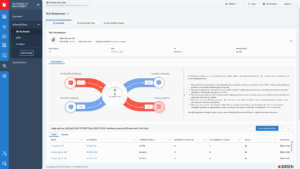
Ultimately, our goal is to help teams secure environments they can’t afford to misunderstand. In 2026, that means giving them more clarity, more control, and more time back in their day. We’ve come a long way together, but there’s still so much left to do. For a quick peek into our platform, check out our latest video here.

Contact RedSeal today to learn how RedSeal can support your exposure management journey.
The Auto Industry’s Invisible Crisis: Why Exposure Management Can’t Wait

The scene has played out across the automotive industry with disturbing regularity. A major dealer network suddenly goes dark. Service bays fall silent. Parts departments revert to handwritten orders. Customers wait for days while technicians work without access to repair histories or diagnostic systems. The culprit? Ransomware that shouldn’t have been able to spread so far, so fast. 

What’s alarming isn’t that these attacks are happening. It’s that the same vulnerability pattern keeps repeating across different organizations, different geographies, and different segments of the auto ecosystem. The movie changes, but the plot stays the same. 

The Perfect Storm: Complexity Meets Connectivity 

Today’s automotive organizations bear little resemblance to the dealerships and manufacturers of a decade ago. A single dealer group now operates across dozens of locations with hundreds of interconnected systems: showrooms, service centers, parts warehouses, body shops, and cloud platforms all communicating constantly. Add in OT systems managing shop equipment, telematics networks tracking vehicle fleets, and SD-WAN connections linking it all together, and you have an environment of staggering complexity. 

The problem isn’t the technology itself. It’s that almost no one can answer a simple question: How is everything actually connected? 

Without a clear, continuously updated map of how systems truly interconnect across IT, cloud, and OT environments, segmentation becomes wishful thinking. Firewalls sit in place. Rules get written. But whether they actually prevent lateral movement in this sprawling hybrid environment? That’s often unknown until an attacker proves otherwise. 

The Vendor Backdoor 

The pattern is now predictable. Attackers don’t waste time trying to breach a well-defended primary network when they can simply walk through a vendor connection instead. Auto organizations depend on an intricate web of third parties: dealer management systems, warranty processors, credit verification services, website hosts, and telematics providers. Each connection is a business necessity. Each is also a potential entry point. 

Recent incidents show attackers compromising vendors first, then using those trusted connections to move laterally into core systems. What was designed as a convenience for business operations becomes a highway for adversaries. Supply chain compromise isn’t an exotic threat anymore. It’s become the most reliable path to enterprise access. 

The uncomfortable truth? Most organizations treat vendor connections as external relationships when they should be treating them as extensions of their own attack surface. 

When Networks Betray You 

Once attackers establish that initial foothold through a vendor or compromised credential, weak segmentation becomes their greatest ally. From a single compromised system, they frequently gain access to domain controllers, HR and payroll databases, financial systems, engineering workstations holding intellectual property, and even OT networks controlling shop floor operations. 

These networks weren’t designed with adversarial movement in mind. They were designed for operational efficiency. The result is that a breach in one location can rapidly become an enterprise-wide crisis. Flat networks don’t just increase risk; they accelerate catastrophe. 

The Double Blow 

Modern ransomware attacks in the auto sector follow a ruthless playbook: gain access quietly, move laterally to map the environment, exfiltrate valuable data, then deploy ransomware timed for maximum disruption. This double-extortion approach ensures the damage continues long after encrypted systems are restored. Regulatory investigations, legal exposure, customer notification requirements, and brand damage persist for months or years. 

For service-dependent businesses like auto dealers and equipment distributors, even a few days of downtime translates directly into massive revenue loss and eroded customer trust. The operational impact is immediate and severe. 

The Gap That Matters Most 

Here’s what’s striking about many of these incidents: the affected organizations weren’t lacking security tools. They had vulnerability scanners, endpoint detection, security information systems, and firewalls. What they lacked was exposure understanding. 

They couldn’t answer critical questions: Which vulnerabilities are actually reachable from the internet or vendor connections? Which paths lead to our most critical systems? Do our segmentation controls truly enforce isolation? Which handful of fixes would materially reduce attacker movement? 

Without this context, security teams drown in endless vulnerability lists, prioritizing by volume instead of impact. They’re busy, but not necessarily addressing the exposures that matter most. 

The Urgency Is Now 

The automotive industry’s distributed, interconnected nature isn’t going to simplify. Vendor dependencies will only deepen. The threat landscape will continue to intensify. Waiting for the next incident to reveal your exposures is no longer a viable strategy. 

Cyber resilience in this environment demands a fundamental shift from assumption to intelligence. Organizations must move from believing their networks are segmented to validating that segmentation actually works. From hoping vendors can’t reach critical systems to confirming exactly what they can access. From reacting to attacks to engineering resilience against them. 

The organizations that will survive and thrive are those that replace security theater with exposure intelligence—those that can see how attackers actually move through their real networks and take action before the ransomware deploys. 

In today’s hostile digital environment, visibility isn’t optional. It’s the foundation of survival. The question isn’t whether to invest in exposure management. It’s whether you’ll do it proactively or learn its value the hard way. 

Contact RedSeal today to move your organization towards preemptive exposure management . 

Drowning in Vulnerabilities? Here’s How to Finally Know What to Fix First

Security teams are drowning in vulnerabilities. Thousands of new Common Vulnerabilities and Exposures (CVEs) emerge every month, and the number of assets in hybrid environments continues to grow. The challenge isn’t finding exposures; it’s knowing which ones actually matter. With limited staff and constant pressure to reduce risk, the critical question becomes: Which risks do we tackle first, and why? 

Moving Beyond a List of Vulnerabilities 

Traditional tools surface endless lists of issues without context. A vulnerability on a low-value asset is treated the same as one on a mission-critical system. This leaves teams guessing, executives frustrated, and remediation delayed. 

That’s why RedSeal built Risk Radius™, to move beyond raw vulnerability counts and bring explainable, business-aligned context to risk decisions. Risk Analysis in the RedSeal platform changes the conversation. Instead of showing only what’s vulnerable, it explains why an asset is risky, how the score was calculated, and what the potential impact would be if compromised. 

Introducing Risk Radius™ 

At the center of this analysis is Risk Radius™, RedSeal’s proprietary algorithm that makes risk explainable. Rather than delivering another opaque score, Risk Radius turns complex exposure data into a clear, defensible story of risks showing what’s exposed, why it matters, and what to fix first. 

It combines the likelihood of compromise with potential business impact to highlight the assets that matter most. 

With Risk Radius, customers can see: 

  • Why an asset is considered high risk 
  • How its score was calculated 
  • What the potential blast radius would be if it were compromised 

Unlike black-box scoring models, teams gain transparent insights they can confidently share with executives, auditors, and insurers, transforming vulnerability management from guesswork into an explainable, business-aligned process. 

How We Arrive at Risk Scores 

Not every risk is created equally. A forgotten file server and a domain controller may both have vulnerabilities, but only one could disrupt business continuity if breached. 

Risk Radius calculates Risk Scores by considering multiple parameters: 

  • Criticality to the business
    Is the asset tied to operations, compliance, customer data, or safety? For example, domain controllers, Enterprise Resource Planning (ERP) platforms, and Operational Technology (OT) controllers often represent high business impact. 
  • Connectivity and exposure
    How reachable is the asset from potential attack entry points? Highly connected systems that bridge Information Technology (IT), OT, cloud, or remote environments naturally increase risk. 
  • Potential blast radius
    If compromised, how much farther could a threat actor move? Could they pivot into critical systems or exfiltrate sensitive data? 
  • Ease of compromise
    How hard would it be for an attacker to take control if they gained access? Are controls in place to slow them down? 
  • Business context and classification
    Has the organization designated it as holding sensitive data, intellectual property, or workloads tied to regulatory frameworks? Assets tied to Payment Card Industry Data Security Standard (PCI), Health Insurance Portability and Accountability Act (HIPAA), or internal “crown jewels” designations carry higher risk weight. 

By combining these factors, Risk Radius delivers a Risk Score that reflects both technical exposure and business importance. This ensures that the vulnerabilities surfaced at the top of the list are the ones most likely to reduce risk if fixed. 

Why This Matters 

  • For Security Teams: Prioritize efforts with confidence and focus limited resources where they matter most. 
  • For Executives: Gain clarity into the true business impact of vulnerabilities and support smarter decision-making. 
  • For Auditors and Insurers: Provide transparent, defensible evidence of how risks are scored and managed. 

A Clear Path to Risk Reduction 

Risk Radius transforms vulnerability management from a guessing game into an explainable process. By showing why an asset is risky and how much it matters, RedSeal empowers organizations to cut through noise, align security and business priorities, and reduce exposure faster. 

See your risk the way your business does. Request a demo and experience how RedSeal helps you prioritize what truly matters. 

RedSeal recognized in the 2025 Gartner® Magic Quadrant™ for Exposure Assessment Platforms: A Strong Position in a Rapidly Expanding Market

The release of the first-ever Gartner® Magic Quadrant™ for Exposure Assessment Platforms (EAP) marks an important moment for the industry, and we’re proud that RedSeal was selected as one of just 20 vendors recognized out of nearly 100 evaluated.

Being included in this inaugural report validates both the relevance of exposure management as a discipline and the importance of the real-world operational challenges RedSeal has been solving for years.

But the report represents only a snapshot in time and RedSeal has moved fast, delivering significant advancements since the evaluation period.

A Broader Footprint Than Many Realize

Gartner highlighted RedSeal’s long-standing strength in the federal sector, and that reputation is well earned. Our certifications, mission-critical deployments, and long-term agency relationships reflect deep trust in some of the most demanding and highly regulated environments in the world.

But our impact extends far beyond federal.

RedSeal today secures complex hybrid networks across critical infrastructure, enterprise environments, and global markets, including energy, healthcare, manufacturing, transportation, water, and financial services. These organizations face exposure management challenges that require  precise network modeling, scale to integrate with thousands of unique devices, and context to prioritize vulnerabilities, and RedSeal is purpose-built to meet those needs.

Progress Since the Evaluation: Delivering, Not Just Promising

The Gartner MQ process closed months before publication, and since then, RedSeal has delivered innovation at a rapid pace.

Notably, we have already addressed two of the cautions mentioned in the report including major enhancements in workflow automation and remediation capabilities. We’ve also released or advanced key capabilities such as:

  • Attack path modeling and analytics
  • Threat actor simulation
  • Expanded integrations for exposure validation
  • Accelerated support for complex hybrid and OT environments

In other words: where some vendors are still outlining their roadmaps, RedSeal has been executing .

Uniquely Positioned Across the CTEM Spectrum

Exposure management is evolving quickly, and the Gartner® framework distinguishes between two major categories:

  • Exposure Assessment
  • Adversarial Validation

Most vendors operate on only one side of that equation. RedSeal spans both.

Our platform delivers the visibility, modeling, and prioritization expected of an EAP solution, while also enabling deep attack path analysis, validation, and contextual understanding. This combination positions RedSeal as one of the few vendors capable of powering a full Continuous Threat Exposure Management (CTEM) strategy, not just isolated portions of it.

Focused, Specialized, and Built for Complex Reality

The MQ classification reflects market segmentation, not capability limitations. RedSeal’s strength comes from focus solving exposure management challenges at a depth and scale that generalists often cannot match.

Organizations operating hybrid, distributed, and mission-critical networks rely on RedSeal because the stakes are high, the environments are complex, and the need for clarity is non-negotiable.

We know who we’re built for, and we know the value we deliver.

Looking Ahead

Being selected for this first Magic Quadrant is an important milestone, but it’s only part of the story. RedSeal continues to evolve quickly, with a roadmap designed to bring even more automation, intelligence, and adversarial insight to the exposure management mission.

We are proud of where we stand today and even more excited about where we’re headed.

For customers, partners, and prospects, now is the perfect time to take another look at RedSeal. The pace of our innovation and the depth of our capability has never been greater. Download the Gartner® Magic Quadrant™ for Exposure Assessment Platforms and  Contact RedSeal today, we look forward to showing preemptive exposure management and how RedSeal can help your organization on its journey.

NEW Gartner® Report, Emerging Tech: The Future of Exposure Management is Preemptive.Download Report.