
October 2026 - RedSeal

SINET New York 2026: Five Takeaways on AI, Exposure, and the Future of Cyber Defense

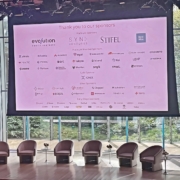
I recently joined cybersecurity leaders at SINET New York for a day of candid conversations about some of the industry’s toughest challenges. With 11 sessions, nearly 70 cybersecurity experts, and plenty of lively discussions in between, there was no shortage of opinions or ideas.

The opening session set the tone with a compelling challenge: The greatest risk facing cybersecurity leaders may not be AI itself, but failing to adapt quickly enough.

That stuck with me. AI is changing the game for both attackers and defenders, bringing unprecedented speed, scale, and sophistication to each side. The opportunity for defenders is enormous, but so is the risk of falling behind. Much of the day’s discussion centered on how we adapt, rethink traditional approaches, and put AI to work in our favor. Yet for all the talk of emerging technology, the conversations kept circling back to the fundamentals: know your environment, understand what’s at risk, and make better decisions about where to act.

Five themes stood out.

1. AI is speeding up attacks and raising the bar for defense.

AI is lowering the barrier to sophisticated attacks. Work that once required specialized skills and considerable time, from finding vulnerabilities to mapping paths through an environment, can increasingly be automated.

Discussions about advanced models like Anthropic’s Mythos added urgency to an already familiar problem. Defenders can’t rely solely on spotting threats after they appear.

The good news? AI offers defenders many of the same advantages. Security teams can move faster, analyze more data, and automate routine work, freeing people to focus on higher-value decisions. But speed alone isn’t the answer. We need to rethink how security teams operate, not simply give them faster tools to do the same things.

Takeaway: As attacks accelerate, organizations need to get ahead of incidents by finding and reducing exploitable exposure before attackers can take advantage of it.

2. Identity is getting more complicated and more consequential.

AI agents and nonhuman identities came up again and again. Organizations are deploying agents that access applications, interact with data, and complete tasks using legitimate credentials. Managing those identities is one challenge. Knowing what they can reach, and what happens when one is compromised or misused, is another.

Traditional identity controls still matter, but access doesn’t exist in isolation. Permissions, network connectivity, system dependencies, and security policies all influence the potential impact of a compromised identity.

Here’s the question that matters: If an attacker takes over a legitimate identity, how far could they get?

Takeaway: Identity security and exposure management are becoming increasingly connected. Knowing who or what has access tells only part of the story. You also need to know where that access leads.

3. Visibility still comes first, especially in critical infrastructure.

For all the talk about emerging technology, some of the most practical advice came from discussions about securing operational technology (OT).

Manufacturing plants, utilities, and other critical infrastructure environments have their own challenges. Equipment can run for decades. Patching may require downtime. And as IT and OT converge, security teams inherit relationships and dependencies that weren’t part of the original design.

One point I heard repeatedly: start with visibility. But finding every asset isn’t enough. Teams need to understand how systems communicate, where vulnerabilities and access paths exist, and which exposures could affect safety, reliability, or operations.

AI, remote monitoring, and greater connectivity are only adding to that complexity.

Takeaway: You can’t protect what you don’t understand. Accurate visibility into assets, connectivity, and attack paths is foundational to operational resilience.

4. Finding vulnerabilities is getting easier. Deciding what to fix isn’t.

This was one of the most relatable discussions of the day. Every security team knows the challenge: identifying a vulnerability doesn’t mean you can fix it immediately.

AI may accelerate discovery, but security and IT teams still need to weigh business impact, coordinate with system owners, test changes, and keep operations running. More findings don’t automatically translate into better security. In fact, they can create more noise for teams already stretched thin.

What matters is understanding which vulnerabilities create meaningful exposure, how attackers could chain them together, and which actions would reduce the most risk.

Sometimes the answer is a patch. Other times, segmentation, tighter access controls, or a configuration change can provide protection while remediation catches up.

Takeaway: Prioritize by real-world exposure and business impact, not simply the volume or severity of findings.

5. Security conversations are shifting from metrics to business resilience.

If there’s one thing security leaders don’t need, it’s another dashboard.

Turning all those scores, findings, and reports into meaningful business decisions is the real challenge. Several sessions focused on connecting cybersecurity more directly to business risk, something that should resonate well beyond the security organization.

Boards and executives want to understand more than how many vulnerabilities exist. They need to know which critical operations are at risk, what the consequences could be, and whether security investments are actually improving resilience.

That becomes especially important when security decisions can affect production, service availability, or public safety.

Takeaway: Strong security programs connect technical exposure to business priorities, giving leaders the context to decide where to invest and act.

Looking ahead: From understanding exposure to acting on it

What I found most interesting was how interconnected these conversations became. AI, identity, cloud, OT, and traditional networks aren’t separate security challenges. They’re increasingly tangled together, and attackers are well aware of the gaps between them.

At RedSeal, these discussions reinforced something we believe strongly: understanding how your environment is connected, how attackers could move through it, and where defensive action can make the greatest difference is essential to getting ahead of risk.

They also left me with plenty of questions worth exploring. Over the coming weeks, we’ll dig deeper into several ideas from SINET, including:

  • How AI is reshaping attack paths, and why defense needs to become more preemptive
  • Why identity-aware exposure management matters in a world of AI agents
  • How digital twins and attack simulation can help teams understand and reduce risk
  • What operational resilience really means across IT and OT
  • How security leaders can move from vulnerability counts to meaningful exposure reduction

My thanks to the SINET team and the many security leaders who shared their experiences, challenged assumptions, and made the day so worthwhile.

I left with a renewed appreciation for both the opportunity and the urgency ahead. AI is changing the rules, and standing still isn’t an option. But as we rethink how cybersecurity operates, we can’t lose sight of the fundamentals: understand your environment, know what matters most, and act before an attacker does.

We’d love to continue the dialog, reach out and share your thoughts and challenges, and to learn more about RedSeal! Contact us today.

PHP2Shell: Your website may be vulnerable. What can an attacker reach next?

This morning, I woke up to cybersecurity news stronger than a double espresso. Two critical vulnerabilities in PHP, the programming language behind WordPress and millions of other websites, had security teams scrambling to patch their servers. As CMO of RedSeal, I found myself looking at the news from two perspectives: as the executive responsible for our own website and as someone who spends her days helping organizations understand why cyber exposure matters. 

Our website runs on WordPress, so this wasn’t just another cybersecurity headline. I needed to understand whether we were exposed, what protections our hosting provider had in place, and whether we needed to take immediate action. After reviewing the situation with our team, we decided to monitor the risk while our provider worked on a patch. By the afternoon, the provider had deployed the necessary updates. Phew. 

This experience reinforced something we talk about constantly at RedSeal. Knowing you have a vulnerability is one thing. Understanding what an attacker could reach if that vulnerability were exploited is another. 

Your website is supposed to be public. The rest of your environment isn’t. 

Organizations spend their time creating websites, customer portals, and applications that anyone on the internet can reach, and, that we want them to reach. What shouldn’t happen is for a compromised web server to give an attacker a pathway into internal databases, sensitive applications, or critical infrastructure. 

Consider a vulnerable WordPress server. An attacker gains control of that server, but what comes next? Can they move into the corporate network, reach sensitive customer information, or find a path into operational technology? 

Unfortunately, many organizations can’t answer those questions with confidence. 

Security teams already manage thousands of vulnerabilities across increasingly complex environments. Another critical alert adds urgency, but it doesn’t necessarily tell them where to focus. Vulnerability scanners can identify affected software, yet they don’t always reveal how a compromised system connects to everything else. 

Segmentation can make all the difference 

Proper segmentation and other security controls should prevent a compromised public-facing server from becoming a gateway to critical systems. But segmentation policies are only as effective as their implementation, and complex environments often contain access paths nobody intended or even knows exist. 

RedSeal helps organizations understand those connections before attackers exploit them. By building a configuration-based digital twin of the environment, RedSeal models connectivity, security controls, and potential attack paths across hybrid IT and OT infrastructure. 

Security teams can identify visibility gaps, determine which critical assets might be reachable from a compromised server, and validate whether segmentation controls actually restrict access. When they find an unsafe path, RedSeal pinpoints the relevant controls and evaluate changes to close it. 

Customers can then use supported workflows and integrations to accelerate remediation. No technology eliminates the need to patch vulnerable software, but effective segmentation can limit how far an attacker gets while teams work to fix the underlying issue. 

AI is changing the clock 

PHP2Shell offers another reminder that AI is accelerating vulnerability discovery. Security teams may have less time between disclosure and potential exploitation, especially when older software or complex environments make patching difficult.  

As a CMO, I’m responsible for keeping our website running, generating leads, and protecting our brand. Becoming the unwitting entry point for a much larger security incident is certainly not in my job description. Fortunately, we were able to quickly assess our exposure and confirm that our marketing website had no inappropriate access paths into the broader RedSeal environment. Even if the site were compromised, an attacker wouldn’t have a path to move deeper into our organization. Our hosting provider also deployed the necessary patches quickly. Today’s experience was a reminder that vulnerabilities are inevitable, but a compromised website shouldn’t put your entire organization at risk. 

Patching remains essential. So does understanding what’s connected to every internet-facing asset, including systems your organization may have forgotten about. A compromised website is bad enough. No marketer wants to discover that it also gave an attacker a path into the rest of the business, and make that kind of headlines. 

If you’re not confident you know what an attacker could reach from your internet-facing systems, let’s talk. That’s exactly the problem RedSeal helps organizations solve. 

AI Is Accelerating Vulnerability Discovery. Exposure Management Has to Accelerate With It.

AI is changing cybersecurity on both sides of the equation. 

Defenders are using AI to find vulnerabilities faster. Attackers are gaining new ways to analyze disclosures, develop exploits, and compress the time between discovery and attack. Meanwhile, security teams are already managing more vulnerabilities than they can realistically investigate or remediate. 

New research from Google Threat Intelligence Group makes the scale of that shift difficult to ignore. 

In its September 30 report, “Vulnerability Discovery and Exploitation Trends in the AI Era,” Google found that vulnerability disclosures more than doubled in 2026, climbing from 5,045 in January to 10,740 in August. At the same time, the average number of vulnerabilities observed being exploited in the wild increased from 10.5 per month in 2025 to 18 per month during the first eight months of 2026. 

Those numbers are significant. 

But one of the most important findings in the report is not how many vulnerabilities exist. 

It is how few actually become part of an attack. 

Google found that only 0.23% of disclosed vulnerabilities in 2026 were observed being actively exploited, roughly one in every 431 vulnerabilities. 

That distinction should fundamentally change how organizations think about vulnerability management. 

More Vulnerabilities Do Not Automatically Mean More Risk 

For years, vulnerability management has largely operated as a numbers problem. 

Find vulnerabilities. Assign severity. Patch as many as possible. Measure progress by how quickly the backlog goes down. 

That model becomes increasingly difficult to sustain when vulnerability discovery itself is accelerating. 

If AI enables researchers, vendors, defenders, and eventually attackers to find weaknesses at a dramatically faster rate, trying to patch everything faster becomes a losing race. 

Google’s findings illustrate exactly why. 

High-risk vulnerability disclosures increased from 131 in January 2026 to 350 in August, according to GTIG. But even as vulnerability volumes increased dramatically, exploitation remained concentrated in a comparatively small subset of weaknesses. 

The question security teams need to answer is therefore not: 

How many vulnerabilities do we have? 

It is: 

Which exposures can an attacker actually use to reach something that matters? 

That is an exposure management problem. 

AI Is Compressing the Defender’s Decision Window 

AI introduces another complication. 

Google’s research suggests AI-assisted vulnerability discovery is not simply producing more findings. The vulnerabilities identified with AI assistance appear to have a different risk profile. 

Among the vulnerabilities Google could identify as likely AI-discovered, 58% were rated Medium Threat Risk compared with 28% of vulnerabilities not identified as AI-discovered. AI-assisted discovery also produced proportionally fewer low-risk findings. Google cautions that the data is still an early indicator, in part because there is no standardized method for identifying AI-discovered vulnerabilities. 

At the same time, attackers may be able to use AI to accelerate what happens after a vulnerability becomes public. 

Google points specifically to the potential for AI and large language models to help threat actors analyze patches, compare software versions, examine proof-of-concept code, and weaponize known vulnerabilities faster. The report attributes much of 2026’s increase in exploitation to the rapid weaponization of these n-day vulnerabilities rather than to a dramatic surge in zero-day attacks. 

As we explored in The Asymmetry Problem, AI is changing the economics of attack by helping adversaries move faster while defenders still have to make careful decisions about what to investigate, prioritize, and remediate. 

That makes the defender’s decision window even smaller. Knowing that a vulnerability exists is no longer enough. 

Organizations need to quickly understand: 

  • Is the affected asset exposed? 
  • Can an attacker reach it? 
  • What security controls stand between the attacker and the asset? 
  • Could exploitation create a path to a critical system? 
  • What would the business impact be if that path were successfully traversed? 
  • What change would reduce the most risk without unnecessarily disrupting operations? 

Answering those questions requires context that a vulnerability record alone cannot provide. 

The Next Security Bottleneck Is Context 

This is where vulnerability management and exposure management begin to diverge. 

A vulnerability scanner can tell you that an asset contains a weakness. 

It cannot, by itself, tell you everything an attacker could do with that weakness inside a complex hybrid environment. 

That distinction becomes even more important as enterprise environments span on-premises infrastructure, public and private clouds, remote users, operational technology, IoT devices, identity systems, security controls, and third-party infrastructure. 

A vulnerability that looks critical on paper may be isolated behind effective controls. 

Another vulnerability with a lower traditional severity score may sit on an exposed asset with a viable path to a critical business system. 

Treating those two findings the same wastes valuable remediation capacity. 

Security teams need to understand vulnerabilities as part of the environment around them. 

Attackers Think in Paths, Not Lists 

Google’s findings about edge infrastructure reinforce this point. 

Edge and security appliances represented 14% of vulnerabilities exploited from January through August 2026, and more than 65% of exploited edge vulnerabilities carried High or Critical Threat Risk ratings. Google notes that adversaries continue to target exposed management interfaces as initial access points. 

But gaining access is only the beginning of an attack. 

Once an attacker gets in, the next questions are the same ones defenders should be asking beforehand: 

Where can I go? 

What can I reach? 

Which controls can I bypass? 

Which assets give me access to something more valuable? 

This is why exposure management cannot stop at vulnerability severity. 

Organizations need to understand potential attack paths across the environment and determine which combinations of vulnerabilities, configurations, connectivity, identities, and security controls could allow an attacker to move from an initial foothold toward critical assets. 

The goal is not simply to find the vulnerability before the attacker. 

It is to understand the environment better than the attacker does. 

AI Infrastructure Creates New Exposure, Too 

Google’s research also highlights another emerging challenge: AI infrastructure itself is becoming part of the attack surface. 

The report found growing vulnerability disclosures across agent orchestration frameworks, AI gateways, inference infrastructure, and related middleware. Agent orchestration frameworks accounted for half of the AI-related vulnerabilities examined by GTIG, while vulnerabilities affecting inference infrastructure included issues involving unauthenticated APIs and server-side request forgery. 

This matters because AI infrastructure does not exist in isolation. 

It connects to APIs, databases, cloud resources, development environments, credentials, internal applications, and increasingly sensitive enterprise data. 

A compromised AI gateway or orchestration platform may therefore represent more than a vulnerable application. It can become another entry point into the broader enterprise environment. 

Security teams need visibility not only into the vulnerability itself, but into what that system connects to and what an attacker could reach next. 

Exposure Management Turns Vulnerability Data Into Decisions 

This is where RedSeal’s approach to preemptive exposure management becomes increasingly important. 

RedSeal builds a continuously updated model of the hybrid environment across on-premises, cloud, remote, OT, and IoT infrastructure. That model provides the foundation for understanding assets, connectivity, controls, exposures, and potential attack paths across environments that are often managed through separate tools. 

From there, organizations can move beyond vulnerability counts and answer the questions that actually drive risk reduction. 

See the environment as an attacker could 

RedSeal’s Hybrid Environment Modeling creates a living view of assets, connections, and controls across the hybrid enterprise. That visibility helps teams understand where vulnerable assets sit within the broader environment rather than evaluating them in isolation. 

Determine whether an exposure creates a viable attack path 

RedSeal’s Attack Path Analysis models the ways threats could move through the environment and evaluates the security controls along those routes. Instead of assuming every vulnerability represents the same level of danger, teams can identify the paths that create meaningful exposure to critical assets. 

Prioritize based on risk, not vulnerability volume 

With Risk Radius™, RedSeal combines exploitability with business impact to help security teams identify which exposures should be addressed first. This shifts remediation from simply working through a vulnerability queue toward reducing the exposures that represent the greatest risk to the organization. 

Give teams evidence they can act on 

Exposure management ultimately has to result in action. That makes CTEM feel like a natural extension of the argument instead of something bolted on for lead gen. RedSeal provides SecOps and NetOps teams with evidence about affected assets, connectivity, attack paths, and controls so remediation can focus on specific changes rather than sending another undifferentiated list of vulnerabilities to infrastructure teams. 

The Future of Vulnerability Management Is Not More Patching. It Is Better Prioritization. 

Google concludes that organizations need to move away from unprioritized mass patching and toward risk-based triage as vulnerability discovery and exploitation accelerate. 

We agree. 

AI will continue making vulnerability discovery faster. 

It will make vulnerability analysis faster. 

It will increasingly help defenders remediate problems faster. 

And attackers will benefit from many of those same advances. 

That means speed matters. But context determines where that speed should be applied. 

The security teams that succeed in this environment will not necessarily be the organizations that patch the most vulnerabilities. 

They will be the organizations that can continuously understand their hybrid environment, identify the exposures that create viable paths to critical assets, prioritize them according to actual business risk, and mobilize remediation before those paths are exploited. 

That is the shift from vulnerability management to exposure management. 

And in the AI era, that shift is becoming increasingly urgent. 

Ready to put exposure management into practice? 

Learn how Continuous Threat Exposure Management helps security teams move from reactive vulnerability management to a repeatable process for identifying, prioritizing, validating, and reducing the exposures that matter most. 

Download the CTEM White Paper.  

NEW Gartner® Report, Emerging Tech: The Future of Exposure Management is Preemptive.Download Report.