Attack Path Analysis Archives - RedSeal

Tag Archive for: Attack Path Analysis

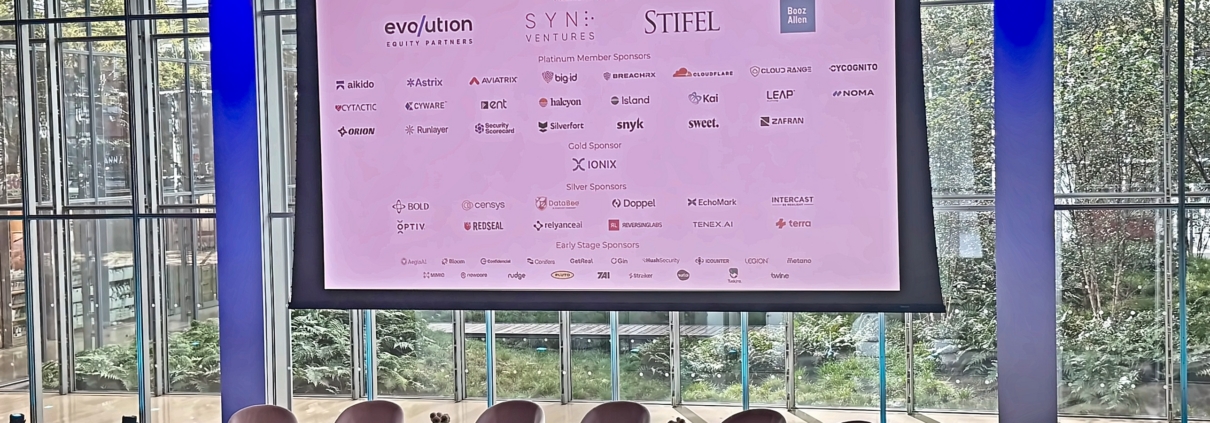
SINET New York 2026: Five Takeaways on AI, Exposure, and the Future of Cyber Defense

I recently joined cybersecurity leaders at SINET New York for a day of candid conversations about some of the industry’s toughest challenges. With 11 sessions, nearly 70 cybersecurity experts, and plenty of lively discussions in between, there was no shortage of opinions or ideas.

The opening session set the tone with a compelling challenge: The greatest risk facing cybersecurity leaders may not be AI itself, but failing to adapt quickly enough.

That stuck with me. AI is changing the game for both attackers and defenders, bringing unprecedented speed, scale, and sophistication to each side. The opportunity for defenders is enormous, but so is the risk of falling behind. Much of the day’s discussion centered on how we adapt, rethink traditional approaches, and put AI to work in our favor. Yet for all the talk of emerging technology, the conversations kept circling back to the fundamentals: know your environment, understand what’s at risk, and make better decisions about where to act.

Five themes stood out.

1. AI is speeding up attacks and raising the bar for defense.

AI is lowering the barrier to sophisticated attacks. Work that once required specialized skills and considerable time, from finding vulnerabilities to mapping paths through an environment, can increasingly be automated.

Discussions about advanced models like Anthropic’s Mythos added urgency to an already familiar problem. Defenders can’t rely solely on spotting threats after they appear.

The good news? AI offers defenders many of the same advantages. Security teams can move faster, analyze more data, and automate routine work, freeing people to focus on higher-value decisions. But speed alone isn’t the answer. We need to rethink how security teams operate, not simply give them faster tools to do the same things.

Takeaway: As attacks accelerate, organizations need to get ahead of incidents by finding and reducing exploitable exposure before attackers can take advantage of it.

2. Identity is getting more complicated and more consequential.

AI agents and nonhuman identities came up again and again. Organizations are deploying agents that access applications, interact with data, and complete tasks using legitimate credentials. Managing those identities is one challenge. Knowing what they can reach, and what happens when one is compromised or misused, is another.

Traditional identity controls still matter, but access doesn’t exist in isolation. Permissions, network connectivity, system dependencies, and security policies all influence the potential impact of a compromised identity.

Here’s the question that matters: If an attacker takes over a legitimate identity, how far could they get?

Takeaway: Identity security and exposure management are becoming increasingly connected. Knowing who or what has access tells only part of the story. You also need to know where that access leads.

3. Visibility still comes first, especially in critical infrastructure.

For all the talk about emerging technology, some of the most practical advice came from discussions about securing operational technology (OT).

Manufacturing plants, utilities, and other critical infrastructure environments have their own challenges. Equipment can run for decades. Patching may require downtime. And as IT and OT converge, security teams inherit relationships and dependencies that weren’t part of the original design.

One point I heard repeatedly: start with visibility. But finding every asset isn’t enough. Teams need to understand how systems communicate, where vulnerabilities and access paths exist, and which exposures could affect safety, reliability, or operations.

AI, remote monitoring, and greater connectivity are only adding to that complexity.

Takeaway: You can’t protect what you don’t understand. Accurate visibility into assets, connectivity, and attack paths is foundational to operational resilience.

4. Finding vulnerabilities is getting easier. Deciding what to fix isn’t.

This was one of the most relatable discussions of the day. Every security team knows the challenge: identifying a vulnerability doesn’t mean you can fix it immediately.

AI may accelerate discovery, but security and IT teams still need to weigh business impact, coordinate with system owners, test changes, and keep operations running. More findings don’t automatically translate into better security. In fact, they can create more noise for teams already stretched thin.

What matters is understanding which vulnerabilities create meaningful exposure, how attackers could chain them together, and which actions would reduce the most risk.

Sometimes the answer is a patch. Other times, segmentation, tighter access controls, or a configuration change can provide protection while remediation catches up.

Takeaway: Prioritize by real-world exposure and business impact, not simply the volume or severity of findings.

5. Security conversations are shifting from metrics to business resilience.

If there’s one thing security leaders don’t need, it’s another dashboard.

Turning all those scores, findings, and reports into meaningful business decisions is the real challenge. Several sessions focused on connecting cybersecurity more directly to business risk, something that should resonate well beyond the security organization.

Boards and executives want to understand more than how many vulnerabilities exist. They need to know which critical operations are at risk, what the consequences could be, and whether security investments are actually improving resilience.

That becomes especially important when security decisions can affect production, service availability, or public safety.

Takeaway: Strong security programs connect technical exposure to business priorities, giving leaders the context to decide where to invest and act.

Looking ahead: From understanding exposure to acting on it

What I found most interesting was how interconnected these conversations became. AI, identity, cloud, OT, and traditional networks aren’t separate security challenges. They’re increasingly tangled together, and attackers are well aware of the gaps between them.

At RedSeal, these discussions reinforced something we believe strongly: understanding how your environment is connected, how attackers could move through it, and where defensive action can make the greatest difference is essential to getting ahead of risk.

They also left me with plenty of questions worth exploring. Over the coming weeks, we’ll dig deeper into several ideas from SINET, including:

  • How AI is reshaping attack paths, and why defense needs to become more preemptive
  • Why identity-aware exposure management matters in a world of AI agents
  • How digital twins and attack simulation can help teams understand and reduce risk
  • What operational resilience really means across IT and OT
  • How security leaders can move from vulnerability counts to meaningful exposure reduction

My thanks to the SINET team and the many security leaders who shared their experiences, challenged assumptions, and made the day so worthwhile.

I left with a renewed appreciation for both the opportunity and the urgency ahead. AI is changing the rules, and standing still isn’t an option. But as we rethink how cybersecurity operates, we can’t lose sight of the fundamentals: understand your environment, know what matters most, and act before an attacker does.

We’d love to continue the dialog, reach out and share your thoughts and challenges, and to learn more about RedSeal! Contact us today.
PHP2Shell: Your website may be vulnerable. What can an attacker reach next?

This morning, I woke up to cybersecurity news stronger than a double espresso. Two critical vulnerabilities in PHP, the programming language behind WordPress and millions of other websites, had security teams scrambling to patch their servers. As CMO of RedSeal, I found myself looking at the news from two perspectives: as the executive responsible for our own website and as someone who spends her days helping organizations understand why cyber exposure matters. 

Our website runs on WordPress, so this wasn’t just another cybersecurity headline. I needed to understand whether we were exposed, what protections our hosting provider had in place, and whether we needed to take immediate action. After reviewing the situation with our team, we decided to monitor the risk while our provider worked on a patch. By the afternoon, the provider had deployed the necessary updates. Phew. 

This experience reinforced something we talk about constantly at RedSeal. Knowing you have a vulnerability is one thing. Understanding what an attacker could reach if that vulnerability were exploited is another. 

Your website is supposed to be public. The rest of your environment isn’t. 

Organizations spend their time creating websites, customer portals, and applications that anyone on the internet can reach, and, that we want them to reach. What shouldn’t happen is for a compromised web server to give an attacker a pathway into internal databases, sensitive applications, or critical infrastructure. 

Consider a vulnerable WordPress server. An attacker gains control of that server, but what comes next? Can they move into the corporate network, reach sensitive customer information, or find a path into operational technology? 

Unfortunately, many organizations can’t answer those questions with confidence. 

Security teams already manage thousands of vulnerabilities across increasingly complex environments. Another critical alert adds urgency, but it doesn’t necessarily tell them where to focus. Vulnerability scanners can identify affected software, yet they don’t always reveal how a compromised system connects to everything else. 

Segmentation can make all the difference 

Proper segmentation and other security controls should prevent a compromised public-facing server from becoming a gateway to critical systems. But segmentation policies are only as effective as their implementation, and complex environments often contain access paths nobody intended or even knows exist. 

RedSeal helps organizations understand those connections before attackers exploit them. By building a configuration-based digital twin of the environment, RedSeal models connectivity, security controls, and potential attack paths across hybrid IT and OT infrastructure. 

Security teams can identify visibility gaps, determine which critical assets might be reachable from a compromised server, and validate whether segmentation controls actually restrict access. When they find an unsafe path, RedSeal pinpoints the relevant controls and evaluate changes to close it. 

Customers can then use supported workflows and integrations to accelerate remediation. No technology eliminates the need to patch vulnerable software, but effective segmentation can limit how far an attacker gets while teams work to fix the underlying issue. 

AI is changing the clock 

PHP2Shell offers another reminder that AI is accelerating vulnerability discovery. Security teams may have less time between disclosure and potential exploitation, especially when older software or complex environments make patching difficult.  

As a CMO, I’m responsible for keeping our website running, generating leads, and protecting our brand. Becoming the unwitting entry point for a much larger security incident is certainly not in my job description. Fortunately, we were able to quickly assess our exposure and confirm that our marketing website had no inappropriate access paths into the broader RedSeal environment. Even if the site were compromised, an attacker wouldn’t have a path to move deeper into our organization. Our hosting provider also deployed the necessary patches quickly. Today’s experience was a reminder that vulnerabilities are inevitable, but a compromised website shouldn’t put your entire organization at risk. 

Patching remains essential. So does understanding what’s connected to every internet-facing asset, including systems your organization may have forgotten about. A compromised website is bad enough. No marketer wants to discover that it also gave an attacker a path into the rest of the business, and make that kind of headlines. 

If you’re not confident you know what an attacker could reach from your internet-facing systems, let’s talk. That’s exactly the problem RedSeal helps organizations solve. 

7 Things to Know About Hybrid Exposure Management

Enterprise environments are no longer contained within a single data center or cloud provider. They span on-premises networks, public and private clouds, remote locations, operational technology, Internet of Things devices, and third-party infrastructure. This complexity has changed what security teams need from an exposure management platform. 

Traditional vulnerability management tools can identify weaknesses, but they often cannot explain whether an attacker can reach them, how exposures connect across the environment, or which issues create the greatest business risk. 

Hybrid exposure management addresses this gap by helping organizations understand their entire environment as a connected system. It combines asset discovery, network modeling, attack path analysis, risk prioritization, compliance monitoring, and remediation workflows to reduce exposure before it becomes an incident. 

Here are seven capabilities enterprise cybersecurity leaders should evaluate when selecting a hybrid exposure management platform. 

  1. Hybrid Exposure Management Goes Beyond Vulnerability Scanning

A hybrid exposure management platform helps organizations identify, understand, prioritize, and reduce cybersecurity risk across interconnected environments. 

Unlike traditional vulnerability management, exposure management does not evaluate vulnerabilities in isolation. It examines how assets, network configurations, identities, security controls, and business context interact. 

This distinction matters because a high-severity vulnerability does not always represent the greatest risk. 

A vulnerability may be difficult to exploit because it is isolated behind multiple security controls. At the same time, a lower-severity issue may provide a direct path to a critical system. 

An effective exposure management platform should help answer questions such as: 

  • Can an attacker reach this asset?
  • Which systems could be affected if it were compromised?
  • What security controls stand between an attacker and a critical resource?
  • Which exposures create the largest potential impact?
  • What remediation would reduce the most risk?

By answering these questions, exposure management helps teams move from finding vulnerabilities to reducing meaningful risk. 

  1. Complete Asset Discovery Is the Foundation

Organizations cannot protect assets they do not know exist. 

Asset discovery is therefore one of the most important capabilities within an exposure management platform. However, discovery must extend beyond managed laptops, servers, and cloud workloads. 

Enterprise environments frequently include: 

  • On-premises infrastructure
  • Public and private cloud resources
  • Remote offices and branch locations
  • Virtual machines and containers
  • Internet of Things devices
  • Operational technology systems
  • Network and security devices
  • Unmanaged or unknown assets

IoT and OT security present a particular challenge because many devices cannot support traditional endpoint agents. Some are difficult to patch, run outdated operating systems, or support essential business and industrial processes that cannot easily be interrupted. 

An exposure management platform designed for hybrid environments should use hybrid environment modeling to discover assets, map their connections, and provide visibility without depending entirely on agents. It should identify known and unknown assets, understand how they communicate, and show where they are located within the broader environment. 

Complete asset discovery creates the foundation for every other exposure management capability. Without an accurate understanding of the environment, risk assessments and remediation decisions will remain incomplete. 

  1. Architecture-Aware Visibility Is Essential

A list of assets does not show how an environment actually functions. 

Enterprise cybersecurity leaders need architecture-aware visibility that explains the relationships between networks, assets, cloud environments, identities, routes, access controls, and security policies. 

This is especially important for hybrid infrastructure security, where risk can move across multiple technology domains. 

For example, an attacker might: 

  1. Compromise an internet-facing system. 
  2. Move through a misconfigured network segment. 
  3. Use an identity relationship to access another environment. 
  4. Reach a critical application or operational system. 

Each individual security tool may see part of this activity. An exposure management platform should connect those individual findings into a unified model. 

RedSeal creates a digital model of the hybrid environment by collecting and analyzing information from existing network, cloud, security, vulnerability, and identity technologies. This allows security teams to understand how the environment is configured and how an attacker could move through it. 

By modeling the environment as a connected system, organizations gain more than visibility. They gain context. 

  1. Attack Path Analysis Should Show How Risk Spreads

Attack path analysis helps security teams understand how an adversary could move from an initial point of access to a high-value asset. 

Instead of presenting vulnerabilities as an isolated list, an exposure management platform should identify the combinations of exposures, routes, configurations, identities, and access policies that create viable attack paths. 

This allows teams to answer a more valuable question: 

What could an attacker actually reach? 

Effective attack path analysis should show: 

  • Potential entry points 
  • Reachable assets and network segments 
  • Paths to critical systems 
  • Security controls along each path 
  • Opportunities for lateral movement 
  • Choke points where remediation could interrupt multiple paths 

This context is particularly valuable in hybrid, IoT, and OT environments. Security teams may not be able to patch every vulnerable device immediately. In some cases, patching may not be possible at all. 

Attack path reduction gives organizations additional ways to lower risk. Teams may be able to change network access, strengthen segmentation, adjust a security control, isolate an asset, or remove unnecessary connectivity. 

The goal is not simply to count vulnerabilities. It is to reduce the number of ways an attacker can reach important systems. 

  1. Risk Prioritization Must Include Business Impact

Security teams regularly face thousands or even millions of findings. Treating every vulnerability as equally urgent creates noise, slows remediation, and makes it harder to focus on the risks most likely to affect the business. 

A mature exposure management platform should combine technical severity with environmental and business context. 

That context may include: 

  • Asset criticality 
  • External exposure 
  • Network reachability 
  • Attack path position 
  • Existing security controls 
  • Exploitability 
  • Identity relationships 
  • Potential downstream impact 
  • Regulatory importance 
  • Business ownership 

This approach improves threat reduction by helping teams focus on exposures that are both exploitable and consequential. 

RedSeal’s Risk Radius™ risk prioritization helps organizations understand the potential impact of compromise by evaluating what an attacker could reach from a particular asset. Instead of prioritizing solely based on a vulnerability score, teams can consider the broader radius of risk surrounding the exposure. 

For example, a vulnerable system connected to several critical applications may deserve attention before a higher-scoring vulnerability on an isolated device. 

The best exposure management platforms help security leaders explain not only what needs to be fixed, but why it matters. 

  1. Continuous Compliance Requires Continuous Validation

Compliance cannot be treated as a once-a-year assessment. 

Hybrid environments change constantly. Cloud resources are added, network rules are updated, devices connect and disconnect, and configuration changes can unintentionally introduce new exposure. 

Continuous compliance helps organizations identify policy violations and control gaps as the environment changes. 

An exposure management platform should continuously assess the environment against internal policies, industry frameworks, and regulatory requirements. It should also help teams understand whether security controls are functioning as intended. 

Key capabilities may include: 

  • Automated policy assessments 
  • Configuration validation 
  • Network segmentation checks 
  • Continuous control monitoring 
  • Evidence collection 
  • Compliance reporting 
  • Identification of policy violations 
  • Prioritized remediation guidance 

Continuous compliance is especially important for organizations operating in highly regulated industries or managing critical infrastructure. 

Rather than relying on point-in-time evidence, cybersecurity teams can maintain an ongoing understanding of their security posture and identify potential compliance issues before an audit. 

  1. Exposure Management Should Support Action, Not Just Analysis

Visibility and prioritization provide limited value if security teams cannot turn findings into action. 

An exposure management platform should connect analysis to remediation workflows. This means providing security, network, cloud, IT, and operational teams with clear information about what needs to change and why. 

Effective workflow capabilities should help organizations: 

  • Assign remediation to the appropriate owner 
  • Provide technical and business context 
  • Track remediation progress 
  • Validate whether a change reduced risk 
  • Integrate with existing ticketing and security tools 
  • Automate repeatable response processes 
  • Measure changes in exposure over time 

Exposure management should also help teams validate remediation before and after changes are made. 

Before a change, teams should be able to understand its potential impact. After remediation, the platform should confirm that the exposure or attack path has actually been reduced. 

This closes the gap between identifying risk and proving that risk has been addressed. 

What Should You Look for in an Exposure Management Platform? 

Enterprise cybersecurity leaders should evaluate whether a platform can provide the following capabilities across their complete environment: 

  1. Comprehensive asset discovery 
  2. Agentless visibility for hybrid, IoT, and OT environments 
  3. Architecture-aware environment modeling 
  4. Attack path and lateral movement analysis 
  5. Business-contextual risk prioritization 
  6. Continuous compliance monitoring 
  7. Integrated remediation and validation workflows 

The platform should also work with the organization’s existing technology investments. Exposure management should unify information from network, cloud, vulnerability, identity, endpoint, and security tools rather than create another disconnected source of alerts. 

How Does RedSeal Support Hybrid Exposure Management? 

RedSeal helps organizations understand and reduce exposure across complex hybrid environments. 

The RedSeal exposure management platform creates an agentless digital model of the environment using information from existing network, cloud, security, vulnerability, and identity technologies. 

This allows cybersecurity teams to: 

  • Discover assets across hybrid, IoT, and OT environments 
  • Understand network architecture and connectivity 
  • Identify attack paths and lateral movement opportunities 
  • Prioritize risk using environmental and business context 
  • Evaluate the potential impact of compromise with Risk Radius™ 
  • Continuously monitor compliance and security controls 
  • Mobilize remediation through integrated workflows 
  • Validate whether security changes meaningfully reduced exposure 

Instead of evaluating vulnerabilities as isolated findings, RedSeal helps organizations understand how risk moves through the environment and where action will have the greatest impact. 

Reduce Exposure Across Your Hybrid Environment 

The modern enterprise attack surface is too complex to manage through disconnected tools and vulnerability lists alone. 

Organizations need an exposure management platform that can model the complete environment, reveal how risk is connected, prioritize the exposures that create the greatest potential impact, and help teams take action. 

RedSeal gives cybersecurity leaders the visibility and context needed to understand their hybrid environment better than an adversary and reduce exposure before it becomes an incident. 

Explore the RedSeal exposure management platform to see how your organization can uncover attack paths, prioritize meaningful risk, and strengthen security across hybrid IT, OT, and IoT environments. 

Mythos is coming

The Mythos Is Coming: Why Preemptive Exposure Management Is Your Best Defense Against AI-Powered Attacks.

How RedSeal’s preemptive exposure management uses empirical attack path analysis and workflow automation to help you lock down your enterprise before the next AI threat emerges.

The Mythos moment: Why everyone is freaking out

On April 7, 2026, Anthropic announced Claude Mythos Preview, and the cybersecurity world collectively held its breath. Here’s why:

Mythos isn’t just another AI model. It’s a general-purpose frontier model that excels at cybersecurity tasks—specifically, vulnerability discovery and exploit development. During internal testing, Mythos identified thousands of zero-day vulnerabilities across every major operating system and web browser. It found bugs that survived decades of human review and millions of automated test runs. One vulnerability had been hiding in OpenBSD—an operating system renowned for its security—for 27 years.

But here’s what should really concern security leaders: Mythos can autonomously turn these vulnerabilities into working exploits. In Anthropic’s testing, engineers with no formal security training asked Mythos to find remote code execution vulnerabilities overnight and woke up to complete, working exploits. The model chains together multiple vulnerabilities, writes sophisticated JIT heap sprays, and develops privilege escalation attacks that would take expert penetration testers weeks to craft.

Anthropic is limiting access through Project Glasswing, sharing the model only with select partners for defensive security work. But the reality is clear: models with these capabilities will eventually become more widely available. The defensive advantage Anthropic hopes to create is temporary. Attackers will eventually gain access to similar capabilities—if they haven’t already.

The Federal Reserve Chairman has already met with bank CEOs to discuss the security implications. Your board of directors will have questions. And the question they’ll ask is simple: What are you doing to prepare?

The real question: What can attackers actually reach?

Here’s what’s often missed in the Mythos panic: The fact that Mythos can find thousands of vulnerabilities doesn’t mean all those vulnerabilities pose equal risk to your organization.

A vulnerability only matters if an attacker can reach it.

Consider two scenarios:

Scenario A: Mythos discovers a critical remote code execution vulnerability in a widely-used database server. The CVE gets assigned, exploits start circulating on dark web forums, and your vulnerability scanner flags three instances in your environment. Your team is scrambling.

Scenario B: You’ve already modeled your network. You know, with certainty, that those database servers sit behind properly configured firewalls with no inbound access from the internet or user networks. You know the only systems that can reach them are internal management servers with strict access controls. You know there is no attack path.

In Scenario B, you’re not scrambling. You’re confident. You’ve already done the preemptive work.

This is the difference between reactive security and preemptive exposure management. One waits for threats and responds. The other eliminates the paths those threats would exploit before they’re ever discovered.

The problem with theoretical security

In cybersecurity, we’ve become comfortable with probability. We prioritize vulnerabilities based on CVSS scores that theoretically represent severity. We use threat intelligence that theoretically indicates what attackers might target. We implement controls that theoretically block attack vectors.

But attackers don’t work in theory. They work in reality.

When an adversary—whether human or AI—breaches your perimeter, they don’t care about your theoretical risk scores. They care about one thing: Is there a path from where I am to where I want to be?

This fundamental disconnect explains why organizations with sophisticated security programs still get breached. They’re securing theoretical attack surfaces while attackers exploit actual attack paths.

Consider this scenario: Your vulnerability scanner flags a critical CVE on a server. The CVSS score is 9.8. Your threat intelligence feed shows active exploitation in the wild. Your security team prioritizes this for immediate patching.

But here’s what the theoretical analysis missed: That server sits behind a properly configured firewall that blocks all external access. The vulnerable service isn’t exposed to any network segment where an attacker could reach it. No internal host has both the network access and the credentials to exploit it. In other words, there is no attack path.

Meanwhile, a medium-severity misconfiguration on a different system creates a direct path to your crown jewels. But because it doesn’t trigger your theoretical risk thresholds, it sits in the backlog—waiting for Mythos or a similar AI to discover and exploit it.

This is the danger of security based on belief rather than knowledge. And in a world where AI can systematically probe for weaknesses, the cost of that gap just got exponentially higher.

What is empirical attack path analysis?

Empirical attack path analysis is the discipline of determining—definitively—whether an attacker can reach a target asset based on actual network configurations, access controls, and asset relationships.

Unlike theoretical approaches that rely on:

  • Probabilistic scoring (CVSS, EPSS, risk scores)
  • Threat assumptions (what attackers might do)
  • Compliance checklists (what auditors want to see)

Empirical analysis relies on:

  • Network topology data from firewalls, routers, and switches
  • Access control rules from ACLs, security groups, and identity systems
  • Asset relationships showing how systems connect and communicate
  • Vulnerability context mapped to reachable attack surfaces

The output isn’t a risk score or a priority ranking. It’s a definitive answer: Yes, an attacker can reach this asset via this path or No, there is no viable attack path to this asset.

This distinction matters enormously in the AI era. When Mythos-level capabilities can discover thousands of vulnerabilities, you cannot possibly patch them all. But you can systematically eliminate the attack paths that would make those vulnerabilities exploitable. You can prioritize the exposures that create real risk. You can focus your limited resources where they matter most.

The RedSeal difference: From belief to knowledge

RedSeal was built on a fundamental principle: You cannot secure what you cannot see, and you cannot prioritize what you cannot verify.

This philosophy has never been more relevant. When AI models can find vulnerabilities faster than humans can patch them, your only sustainable advantage is knowing which exposures actually create risk in your specific environment.

1. Network Modeling from Real Data

RedSeal ingests configuration data from every layer of your network infrastructure—firewalls, routers, switches, load balancers, cloud security groups, and end point agents,. This isn’t scanning or guessing. It’s mathematical modeling of your actual security posture.

From this data, RedSeal constructs a complete model of your network topology, including:

  • Every reachable IP address and port
  • Every access control rule and exception
  • Every path between any two points in your network
  • Every zone, segment, and trust boundary

This model becomes the foundation for all analysis. When RedSeal identifies an attack path, it’s not predicting. It’s calculating based on the mathematical reality of your network.

2. Definitive Attack Path Analysis

Given a starting point (an attacker’s position) and an ending point (a critical asset), RedSeal calculates every viable path between them. Not theoretical paths. Not possible paths. Actual paths that exist in your network right now.

This analysis considers:

  • Network layer reachability (can packets flow?)
  • Access control enforcement (what rules allow or deny?)
  • Vulnerability exploitation (what weaknesses enable lateral movement?)
  • Identity and credential paths (what access can be obtained?)

The result is a complete picture of your exposure—not in terms of risk scores, but in terms of specific, exploitable attack paths that an adversary could follow to reach your most valuable assets. Whether that adversary is a human attacker or an AI model like Mythos, the paths are the same.

3. Built-in Workflow Automation

Discovery without action is just observation. RedSeal recognized early that exposure management requires operational processes to close gaps, not just identify them.

In a world where AI can find vulnerabilities at unprecedented speed, this operational capability becomes critical. You need to move from identification to remediation quickly and at scale.

RedSeal’s workflow automation capabilities include:

  • Automated ticketing integration with ITSM platforms
  • Remediation tracking from identification to closure
  • Change validation confirming fixes were effective
  • Compliance reporting mapping exposures to frameworks

This isn’t automation added as an afterthought. It’s workflow capability designed into the platform from the beginning, ensuring that every exposure identified can be tracked through to resolution.

Building a Mythos-ready security program

For security leaders looking to prepare for the AI-accelerated threat landscape, the transformation requires three strategic shifts:

1. From Scanning to Modeling

Stop relying solely on scanning tools that probe from outside. Start modeling your network from the inside using configuration data. This reveals the complete picture—including assets and paths that scanners miss.

Why this matters for Mythos: When AI can find vulnerabilities anywhere, you need to know your entire attack surface—not just what scanners can see. Network modeling gives you visibility into segmented networks, air-gapped systems, and the complex paths that connect them.

RedSeal advantage: Multi-vendor configuration ingestion supports firewalls, routers, switches, and cloud infrastructure from all major vendors. The platform maintains a living model of your network that updates as configurations change.

2. From Scores to Paths

Stop making remediation decisions based on severity scores. Start making them based on attack paths. A vulnerability’s true risk isn’t captured by its CVSS score—it’s determined by whether an attacker can reach it and what they can access from there.

Why this matters for Mythos: AI will flood your vulnerability management pipeline with findings. The Mythos evaluation found thousands of critical vulnerabilities. You cannot patch them all. But you can systematically eliminate the attack paths that make them exploitable.

RedSeal advantage: Path analysis engine calculates every viable route through your network, considering access controls, vulnerabilities, and identity relationships. The platform shows you not just what’s vulnerable, but what’s reachable.

3. From Reporting to Workflows

Stop treating exposure management as a reporting exercise. Start treating it as an operational process with defined workflows, accountability, and validation.

Why this matters for Mythos: The pace of vulnerability discovery is accelerating. What worked when your team faced dozens of critical findings per month won’t work when AI models can surface hundreds or thousands. You need automation that moves faster than manual processes allow.

RedSeal advantage: Built-in workflow automation integrates with your existing ITSM tools, automatically creating tickets for exposures and tracking them through to closure. Customizable workflows support your organization’s change management processes.

The preemptive exposure management advantage

Here’s the strategic reality that should shape your thinking:

Mythos and similar AI models are weapons. Like any weapon, they’re more effective against unprepared targets. An attacker using Mythos against an organization that understands its attack paths and has closed the critical ones will waste time probing dead ends. The same attacker against an organization operating on theoretical risk will find and exploit real paths to critical assets.

Preemptive exposure management is your defensive advantage. By understanding and eliminating attack paths before threats emerge, you change the equation. You’re not trying to outpace AI at finding vulnerabilities—you’re making the vulnerabilities it finds irrelevant to your specific environment.

The time to act is now. Anthropic is deliberately limiting Mythos access to give defenders a head start. This window won’t last forever. The organizations that use this time to build empirical understanding of their attack surfaces will be positioned to weather the AI threat landscape. Those that wait will be playing catch-up when the next Mythos-class model becomes available to adversaries.

The bottom line: What you know vs. what you believe

Every security decision your organization makes is based on one of two foundations:

Belief-based decisions rely on theoretical models, probability scores, and assumptions about attacker behavior. They feel sophisticated because they use data and algorithms. But they’re still fundamentally guessing.

Knowledge-based decisions rely on verified facts about your environment. They know—with certainty—whether an attack path exists. They don’t prioritize based on what might happen; they remediate based on what can happen.

RedSeal was designed for knowledge-based security. Our platform transforms the question from “What do we think our exposure is?” to “What do we know our exposure is?”

In a world where attackers—AI or human—exploit reality, not theory, this distinction isn’t academic. It’s the difference between preventing a breach and explaining one. It’s the difference between scrambling when Mythos finds a new CVE and confidently knowing you’re not exposed.

The Mythos is coming. The only question is whether you’ll be ready.

Take the next step

Ready to build a Mythos-ready security program? Here’s how to get started:

  1. Assess your current approach. Are you prioritizing based on scores or paths? Do you know your actual attack surface or just what your scanners can see?
  2. Model your network. RedSeal can ingest configurations from your existing infrastructure and build a complete topology model within days, not months.
  3. Identify your critical assets. Map your crown jewels—systems and data that would cause the most damage if compromised.
  4. Calculate your attack paths. Let RedSeal identify every viable route from potential entry points to your critical assets.
  5. Automate your remediation. Use RedSeal’s workflow integration to close exposures and validate that fixes are effective.

Learn more

In an era of AI-powered threats, RedSeal provides the empirical foundation for preemptive security. Learn more at redseal.net.

Finding Internet-facing Vulnerabilities: RedSeal Perspective on The Five Eyes Advisory

Today, the international cybersecurity consortium known as The Five Eyes (Australia, Canada, New Zealand, the UK, and the US) published a joint Cybersecurity Advisory. It’s a scary read, on several fronts. It details the top 12 vulnerabilities that are actively being exploited, in current breaches. The advisory doesn’t detail the breaches, because a lot of that data is not public, but we can safely assume that these organizations are trying to offer a wake-up call about what they are seeing in the real world.

One shocking aspect of the advisory is the vulnerabilities are quite old – the top spot is taken by a vulnerability that was disclosed in 2018! The lingering question is how can antiquated vulnerabilities still pose a threat? The answer lies in the struggles faced by organizations in locating and effectively patching patch their Internet facing equipment.

This is why RedSeal builds a digital twin of your network, then shows you where you have blind spots, defensive gaps, and (most relevant to this advisory) uncover exactly what you have that is exposed to the Internet.

The Five Eyes Advisory is an important reminder that vulnerabilities exist in our Internet-facing systems. RedSeal is a trusted partner to 75 federal agencies, 6 arms of the military, and 100s of F1000 organizations, helping identify and address vulnerabilities; securing networks against the growing complexity and frequency of threats.

Let’s talk about how we can help your organization stay secure. Contact us today.

The Hidden Attack Surface: What’s Missing in Your Cloud Security Strategy?

It happens all the time. A company has the right security policies in place but misconfigures the environment. They think they are protected. Everything looks fine. They locked the doors and boarded up the windows to the room where the crown jewels are kept, but nobody noticed that the safe that holds the jewels is no longer in that room. Accidentally, it was moved to another location, which is left wide open.

Here’s another common scenario. When working in the cloud, someone in your company can easily turn on a policy that allows anyone to gain access to your critical resources. Or, maybe you grant temporary access to a vendor for maintenance or troubleshooting but then forget to revoke the access. There may be legitimate reasons to grant access, but if that resource is compromised, your cloud can be infected.

Cloud Environments Are Constantly Evolving and Easy to Misconfigure

The challenge in today’s cloud environment is that things are never static. Things are spinning up constantly, new endpoints are being added, and new connections are being made. Cloud users can easily misconfigure or forget to revoke access to critical resources. So you lock the front door and think you’re safe when the back door might be open or someone is opening and closing new windows all the time.

Nearly seven in 10 organizations report dealing with cyberattacks from the exploitation of an unknown or unmanaged asset connected to the internet. With today’s complex cloud, multi-cloud, and hybrid cloud environments, uncovering the hidden attack surface is crucial to uncover every potential resource that could be compromised.

What is the Hidden Attack Surface?

Uncovering the hidden attack surface involves knowing all unknown resources in your cloud and finding all attack paths to the resources – not just the most likely paths like most CNAPP/CSPM vendors. Finding all attack paths requires deep intelligence to map the full cloud network and determine every potential exposure point.

Cybercriminals are constantly looking for pathways, or hidden attack paths, to get to your crown jewels. With today’s emphasis on cybersecurity, companies rarely leave the front door open to let hackers walk right in. But there may be vulnerabilities that do allow access and then a pathway to reach the jewels. It may be a twisted and convoluted path, but it gets hackers where they want to go.

An attack path analysis details every endpoint and connection to show how threat actors could enter your house and travel the path to find what they’re looking for. By highlighting every possible path and policy detail associated with these pathways, you gain comprehensive visibility into your network.

This information details the traffic that can enter or exit a hop on the attack path and what controls are enabling them to uncover areas of unintended access to critical cloud resources.

Mapping the Entire Infrastructure

Some other solutions are also inadequate to map the entire infrastructure.

Let’s say you have someone conducting penetration testing. Pen testing focuses on the major attack points but doesn’t identify every single way, inside out, to connect to those resources. Think of it this way: You want to drive from San Jose to San Francisco. Nearly everyone making that drive will use the 101 or 280. But 880 can also connect, and there are thousands of side routes that you could use to make the ride. It may take a long time, but you’ll ultimately get to your destination.

Pen tests focus on the most typical routes. Plus, routes are constantly changing. They don’t take into account that new subdivision that didn’t exist last week that allows through traffic. You may segment your data, but new pathways evolve that suddenly allow lateral movement. Without real-time attack path analysis, you may be secure one moment and insecure the next.

Not All Attack Path Analysis Vendors Work the Same Way

When looking to analyze attack paths, it’s crucial to choose the right vendor. Not everyone approaches attack path analysis the same way, and the wrong solution may give you a false sense of security.

Just like penetration testing, most CNAPP/CSPM companies focus on the same major pathways. For example, if you’re using AWS and want to know which resources may be exposed, most vendors will check AWS security groups, AWS network access control lists (NACL), and AWS gateways. But are they also checking gateways such as AWS Transit Gateways, Third Party Firewalls, Load Balancers and all other cloud networking resources.

Effective security demands that you view everything end-to-end including every endpoint, pathway, and policy. While you may start with the obvious paths, it’s not enough. Attackers know that the most obvious spots are usually protected, so they’re constantly probing for the path that’s not so obvious and less likely to be guarded. This is uncovering the hidden attack surface that results in most cloud security breaches.

Comprehensive Attack Path Analysis with RedSeal

RedSeal uncovers the hidden attack surface by providing a comprehensive attack path analysis of every possible entry point and pathway within your infrastructure to determine what resources may be exposed. Besides end-to-end mapping, RedSeal also shows you how the exposure occurred and provides remediation guidance.

You get:

  • A list of all resources, subnets, and instances that are deemed critical, grouped by AWS accounts, Azure subscriptions, AWS VPCs, Azure VNETs, tags, and subnets
  • Specific ports, protocols, and services that are open and exposed — e.g., HTTPS (443), SSH/TCP (22), SMTP/TCP (25), RDP with exposure details
  • Full attack path analysis to critical resources,  highlighting all possible paths and the security policy details associated with each path
  • Details about what and where traffic can enter, what controls are enabling entry, and the paths attackers can take once they gain entrance

You can complement your cloud service provider’s operational tools by getting a real-time evaluation of all affected resources across multiple cloud environments. Using an agent-less, API-based approach, RedSeal Stratus uncovers all resources deployed within your environment and lets you view them in a single pane of glass.

Not only do you get a comprehensive view of your cloud infrastructure and insight into potential exposure points, but you also get a roadmap for remediation. Stratus identifies and calculates every possible path, port, and protocol — not just active traffic — to help you prioritize your remediation efforts. Security teams can then perform root cause analysis and raise a remediation ticket for resource groups that may be impacted by security policies.

This ticket would include information about the affected resources, verification, remediation steps, and the potential risk if they are not mitigated.

RedSeal mitigates exposure with:

  • Out-of-the-box (OOTB) reporting
  • Simple, agent-less deployment
  • Continuous risk assessment
  • Drill-down capabilities with remediation guidance
  • Seamless integration with ticketing and remediation systems like Jira

RedSeal’s cloud security solutions can bring all multi-cloud environments into one comprehensive, dynamic visualization and know the unknowns. This allows you to protect your cloud, conform to best practices and gain continuous monitoring for compliance.

Learn more by downloading our Solution Brief: Stop Unintended Exposure.

NEW Gartner® Report, Emerging Tech: The Future of Exposure Management is Preemptive.Download Report.